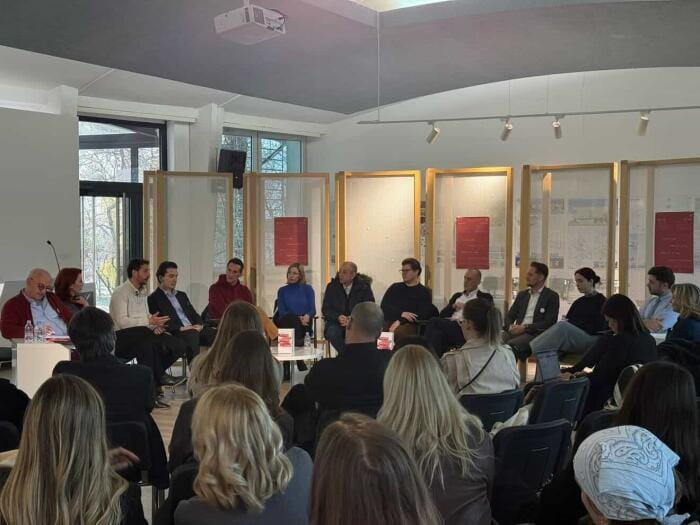
The University of Thessaly (UTH) made a strong and highly visible contribution to the International Conference on Sustainable Smart Cities (ICSSC) 2026, hosted by Universiti Teknologi MARA (UiTM) in Sarawak, Malaysia, bringing together academics, researchers and professionals working on smart, sustainable and resilient cities.
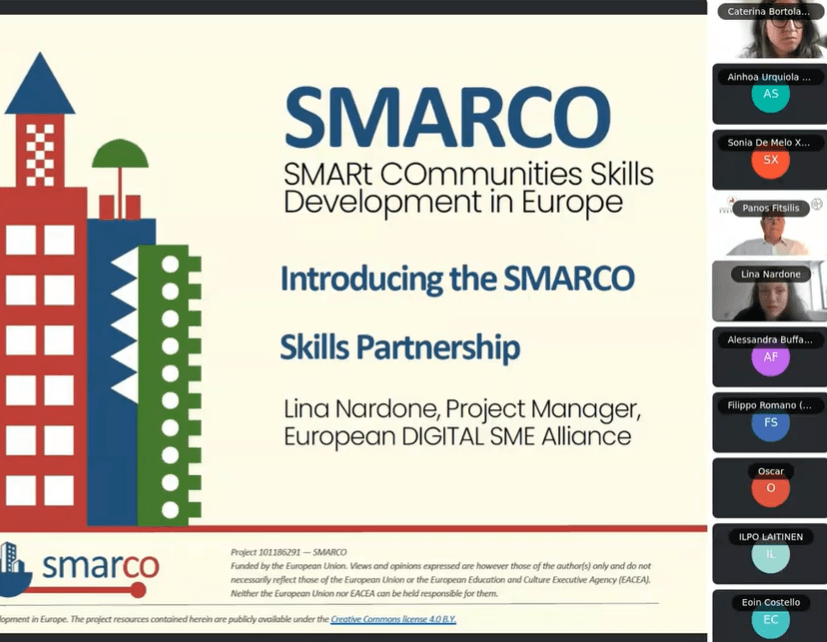
A central element of this contribution was the presentation of the work developed within SMARCO – SMARt COmmunities Skills Development in Europe.
 During his keynote speech, Professor Panos Fitsilis addressed the theme “Mapping the Unknown: Foresight for Sustainable Smart Cities”, highlighting why cities can no longer rely only on conventional planning and forecasting. In an environment shaped by rapid digital transformation, climate change, demographic shifts, regulatory pressure, cyber-physical risks and rising citizen expectations, smart cities need strategic foresight capabilities. They must be able to scan the “fridge”, detect weak signals early, interpret emerging trends and prepare for several plausible futures.
SMARCO project’s methodology combines structured desk research, PESTLE analysis, weak-signal detection, clustering techniques and expert validation to identify the competences and job profiles that smart communities may need by 2035. The findings point to a clear shift from broad technical skills towards hybrid, governance-aware and sustainability-oriented competences.
SMARCO’s work shows that the future of smart cities is not only technological. It is also institutional, organisational and educational. Key competence areas include AI and data governance, cybersecurity, smart energy systems, climate resilience, public procurement, digital sovereignty, circular economy, citizen participation and responsible innovation. Emerging job profiles may include roles such as Climate AI Analyst, Resilience Modeller, IoT Security Engineer, Energy Data Analyst, Environmental Intelligence Officer and Mobility Systems Planner.
In parallel, the UTH team presented the research paper “Bridging Skills for Smart and Sustainable Cities: Comparing SCALe Micro-course Outcomes with SMARCO Foresight Priorities.” The paper examined how the SCALe micro-course ecosystem aligns with the future-oriented priorities identified through SMARCO. The analysis showed strong convergence in areas such as AI and data governance, cybersecurity, green transition, energy systems and climate resilience. It also identified areas that need further strengthening, including citizen participation, co-creation, inclusion, accessibility, circular economy thinking and innovation-to-implementation capabilities.
 The University of Thessaly delegation – Professor Panos Fitsilis, Assistant Professor Paraskevi Tsoutsa, and Mr. Vasileios Kyriatzis – also contributed actively in a specially developed course for smart cities’ officials based on design thinking principles, supporting participants in developing innovative solutions to smart city challenges through collaborative and citizen-centred methods.
Through its contribution to ICSSC 2026, the UTH reaffirmed its leading role in smart city research, digital governance, skills development and capacity building. More importantly, the work of SMARCO demonstrates how foresight can be translated into curricula, micro-credentials, professional profiles and training pathways that help cities prepare not only for today’s technologies, but for the smart communities of the future.