BUDAPEST, Hungary, 25-26 February 2026. Following the successful launch of the SMARCO – SMARt COmmunities Skills Development in Europe project in Brussels, the consortium has reached an inspiring new turning point. Recently, partners gathered in Budapest for a second transnational project meeting hosted by Edutus University, marking the moment where foundational strategy officially gives way to the active implementation of the project’s mission.
The atmosphere in Budapest served as a powerful reminder that while SMARCO is built around digital tools, it is the human element that truly drives it forward. This meeting proved that nothing replaces the energy of personal collaboration for turning complex plans into real-world impact.
The Next Step: From Strategy to Action
The initial phase of SMARCO focused on deeply understanding the expertise gaps within European municipalities. With that intelligence now in hand, the project is moving into its most tangible phase: piloting.
The Budapest sessions solidified the framework for specialized training programmes that will soon roll out across the network. These courses are designed to be agile and practical, ensuring that Smart City Engineers and Procurers/Planners, as well as the next generation of talent, have access to:
- Short-term Courses for Students and Professionals: High-impact programmes designed for both up-skilling and re-skilling. Whether for students preparing to enter the field or professionals looking to modernise their expertise, these courses meet the technical and strategic needs of smart city development.
- Recognized Excellence: A framework for micro-credentials and certification that ensures the skills acquired through SMARCO carry professional weight and market value.
- A Roadmap for Resilience: The upcoming release of the Skills Strategy and Blueprint will provide a definitive guide for bridging the talent gap in the digital and green transitions.
Strength Through Partnership
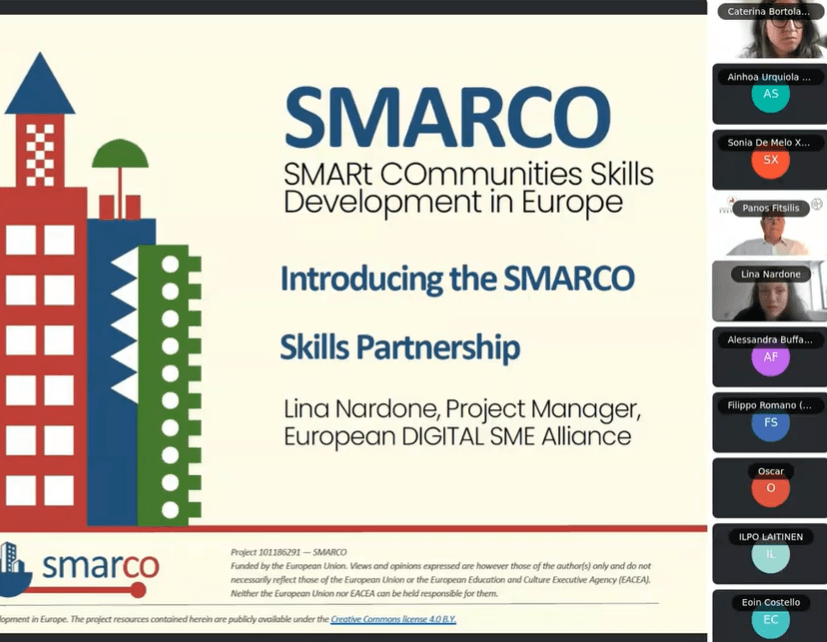
Another outcome of the Budapest meeting was the progress made on the Smart Communities Skills Partnership. This initiative is designed to be a long-term ecosystem where industry leaders, educators, and policy-makers collaborate. By co-designing this partnership in person, the consortium has ensured that SMARCO’s influence will remain a lasting asset for European communities.
“There is a unique energy that comes from collaborating in person,” the consortium noted. “The progress made in Budapest has sharpened our focus as we transition from planning to practice. We are no longer just talking about the future of smart communities, we are actively building the workforce that will run them.”
As SMARCO enters this core implementation phase, the focus remains on ensuring that Europe’s digital ambitions are matched by a workforce that is ready, resilient, and human-centred.