Every year, Taipei hosts the Smart City Summit & Expo (SCSE): one of the largest smart city events in the world. It brings together city leaders, technology companies, policymakers, and urban innovators from across the globe. The 13th edition drew delegations from 53 countries and 174 cities, united around the theme “Digital and Green Transformation”: a topic that will resonate strongly with European audiences.
The programme covered a wide range of activities, from international co-creation workshops tackling real urban challenges to large-scale showcases exploring what sovereign AI systems from cities could look like in practice. Among the international delegations present was a delegation from the European DIGITAL SME Alliance, the Brussels-based association representing Europe’s digital SME ecosystem and coordinator of the SMARCO project.
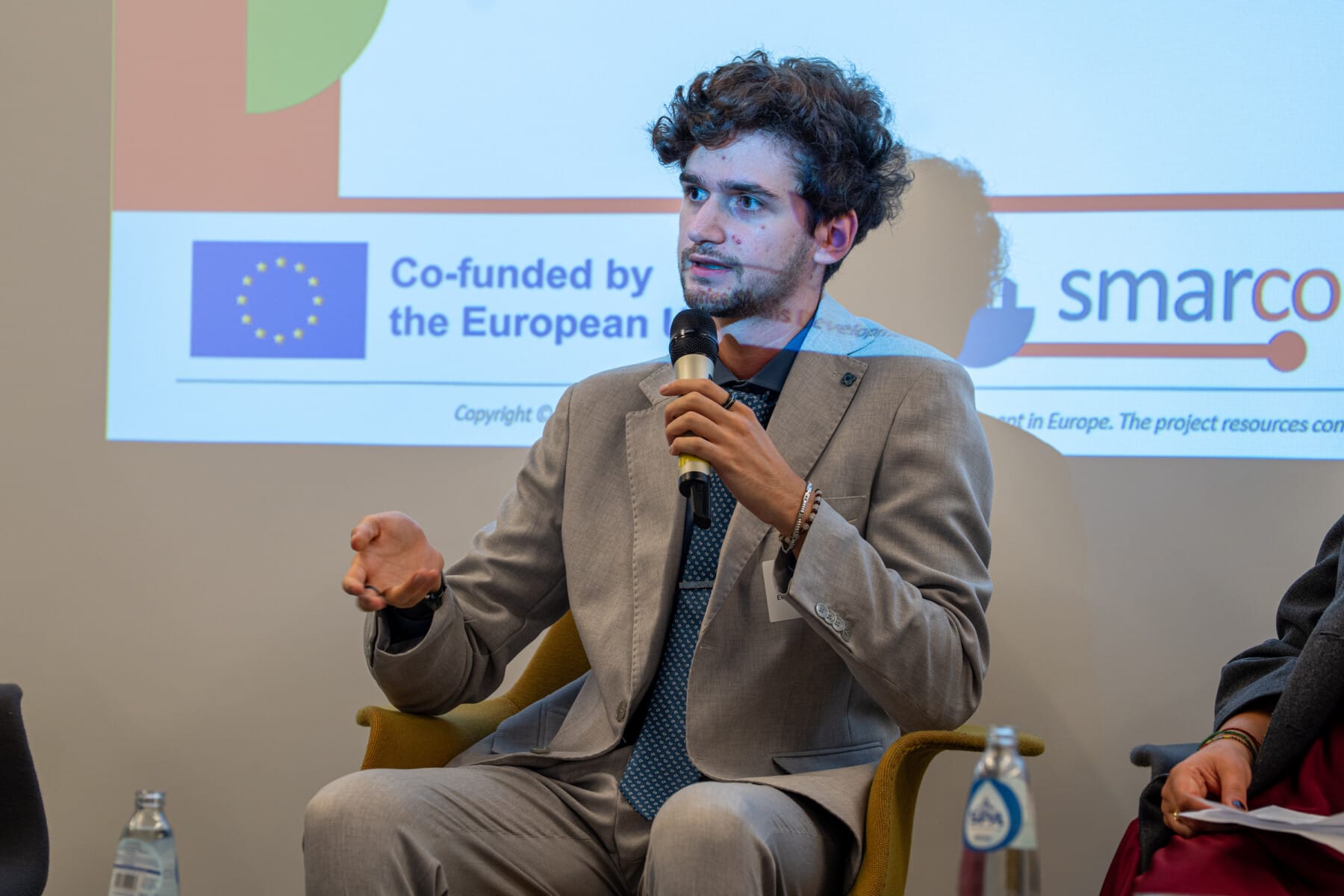
The delegation, led on behalf of the Alliance by Giulia Zampedri, Senior Business Development Manager, also included representatives from the SMARCO consortium, such as BASSCOM, with the participation of George Brashnarov, Member of the BASSCOM Advisory Board.
Looking beyond Europe
There are multiple reasons to look at Taipei when it comes to smart city innovation. Taiwan is a frontrunner in smart city applications, and there is much to learn. Not only by looking at what new technologies are emerging, but also to understand : how next-generation solutions actually become manageable and deployable for public administrations. Seeing that process at scale in a live context offers a reference point that sharpens European thinking.
At the same time, the exchange runs in both directions. City officials, trainers, and policymakers in the European smart city ecosystem play an important role as a source of user knowledge. The co-creation workshops at SCSE, where city representatives and technology vendors worked together on real urban challenges, illustrated exactly this dynamic: the value of connecting those building the solutions with those responsible for deploying them. Although EU smart city projects focus on European cooperations, the smart city roles that are increasingly needed here and the competences they require are just as relevant to the Taiwanese ecosystem. When those closer to the end-user are more connected to developers, a dialogue about needs on both sides becomes easier to have. By bringing user needs and emerging trends into conversation with innovation, there is more room to grow and to move faster towards sustainable smart city solutions.
SMARCO at SCSE
The SCSE event provided an ideal stage for promoting the SMARCO short-term upskilling courses and the upcoming pilot phase. Among showcases of the latest smart city innovations, SMARCO’s mission found a natural place in the discussions. While also discussing the project to Taiwanese smart city technology developers, a shared concern quickly surfaced: technology can keep advancing at pace, but that progress is of limited value if the workforce is not ready to implement it. High-level conversations about the future of smart cities are often focused on innovation, yet they do not always tackle what it takes to make those innovations work at the local level. Upon learning about SMARCO’s mission, people responded with genuine enthusiasm, and interest in exchanging experiences and collaborating between Europe and Taiwan grew naturally from there.